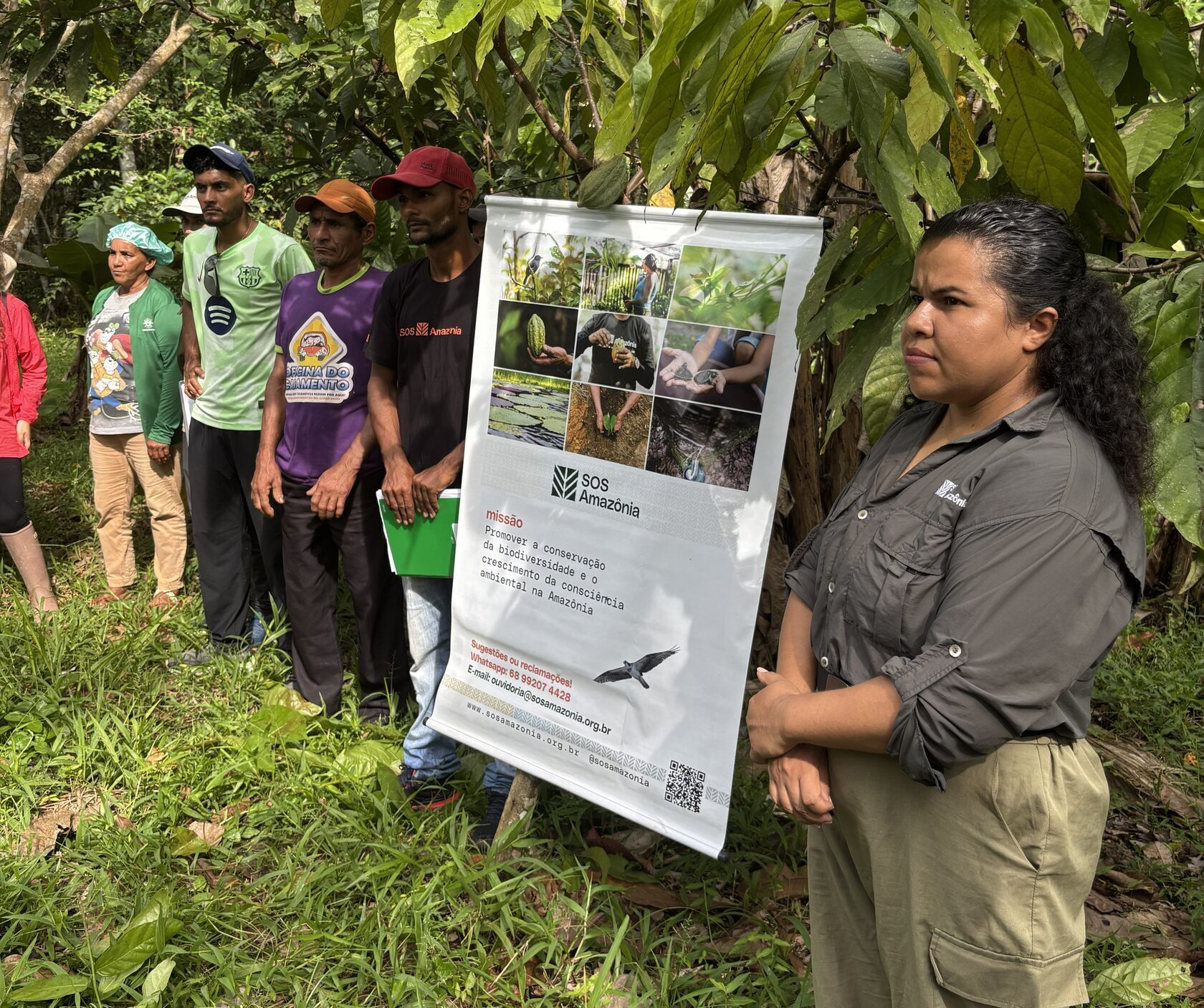
To promote the exchange of knowledge and experiences on forest restoration, SOS Amazônia organized a regional exchange with 28 families from Marechal Thaumaturgo, in the Alto Juruá Extractive Reserve. As part of the activity, two visits were organized on March 28th and 29th to other communities that already have experience in agroforestry and the commercialization of socio-biodiversity products.
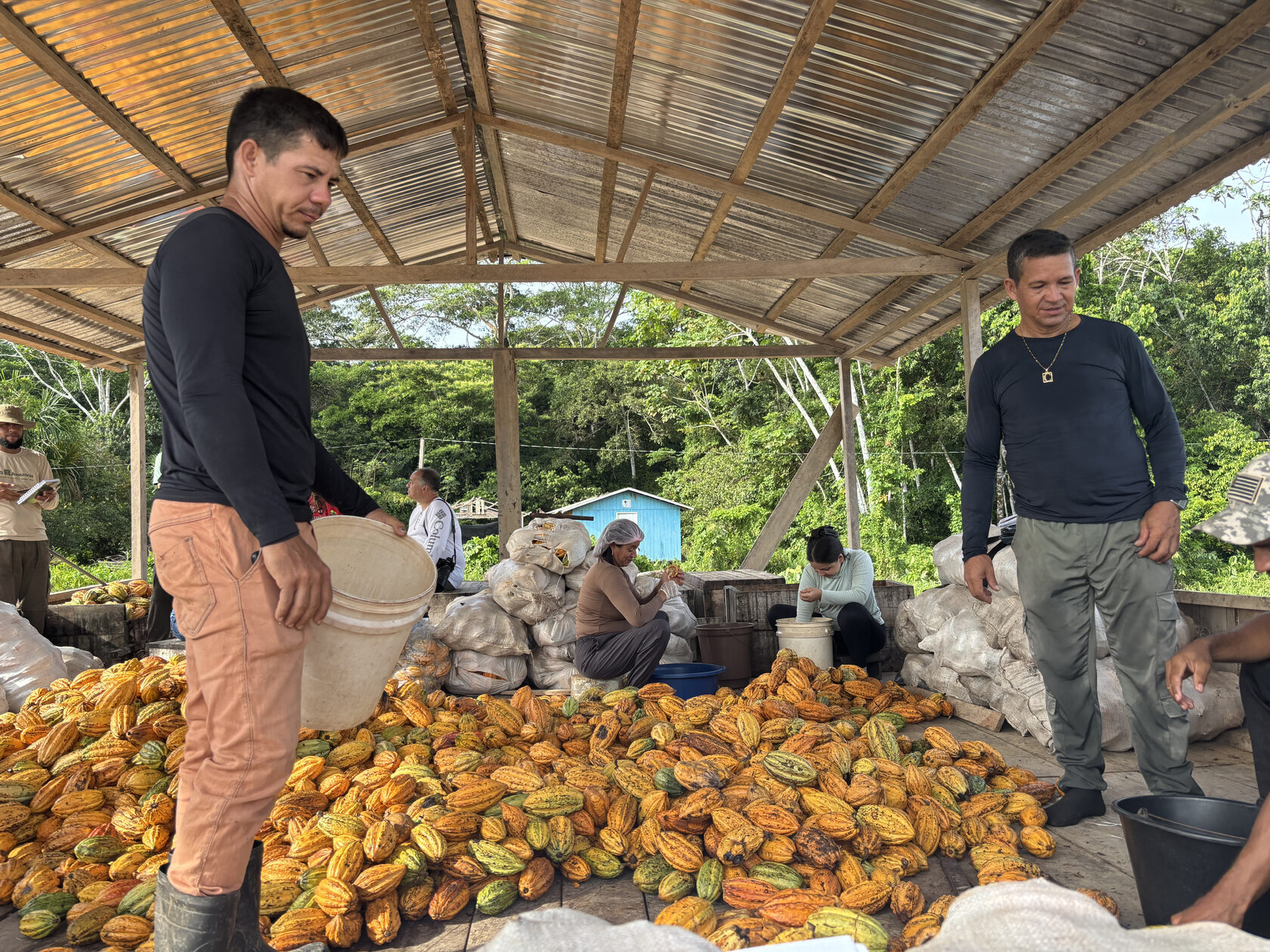
On the first day, the families visited the Novo Horizonte community in the municipality of Guajará, Amazonas, where agroforestry has been practiced since 2015, with wild cocoa as the main productive component. Participants were able to observe the entire post-harvest and processing of cocoa, including breaking, fermentation, and drying, as well as discuss marketing opportunities with partner Luiza Abram. The program also included a roundtable discussion on the history of agroforestry system implementation in the community, in addition to visits to the production areas.
On the first day, the families visited the Novo Horizonte community in the municipality of Guajará, Amazonas, where agroforestry has been practiced since 2015, with wild cocoa as the main productive component. Participants were able to observe the entire post-harvest and processing of cocoa, including breaking, fermentation, and drying, as well as discuss marketing opportunities with partner Luiza Abram. The program also included a roundtable discussion on the history of agroforestry system implementation in the community, in addition to visits to the production areas.
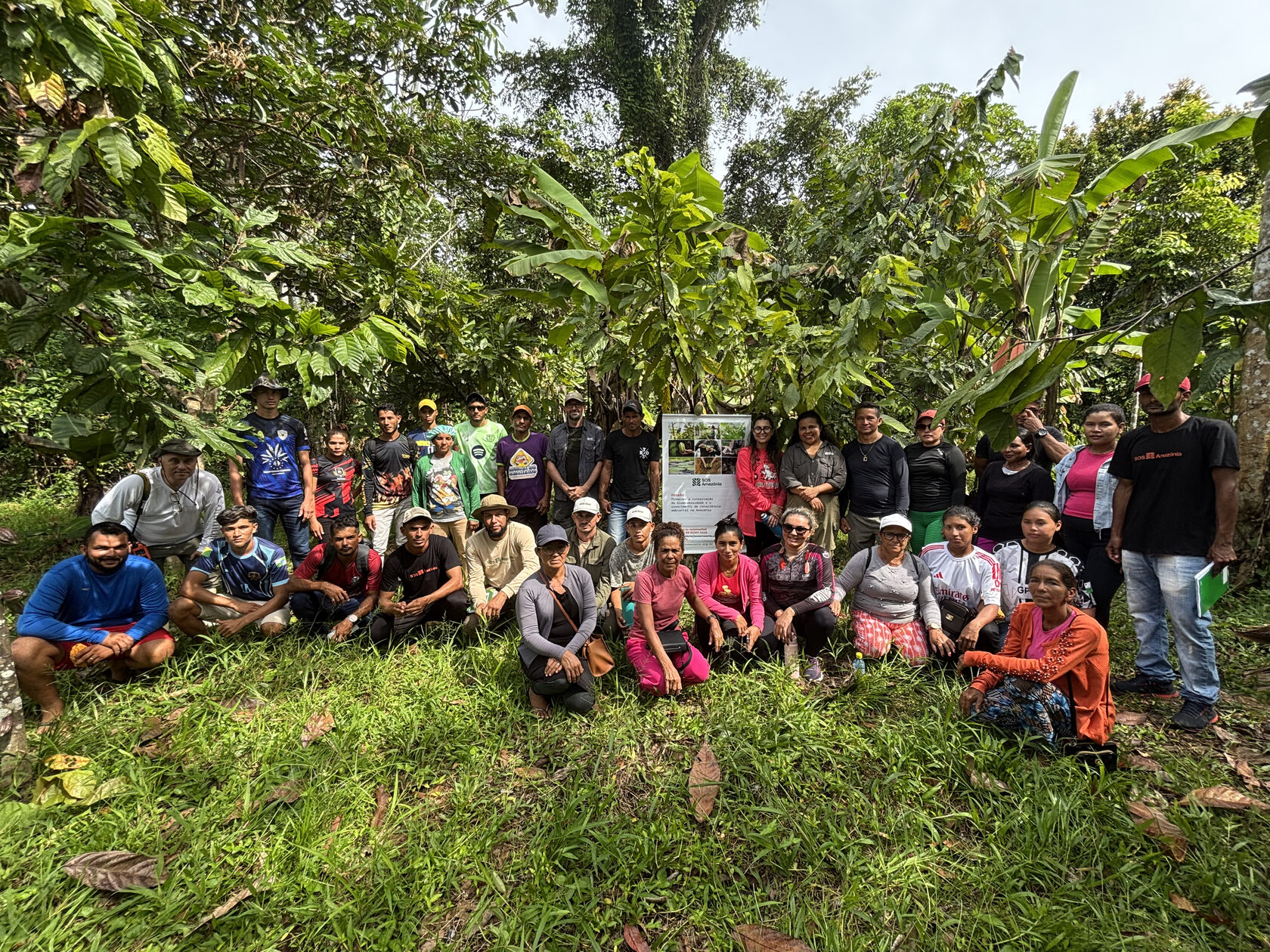
The following day, the exchange continued to the Rodrigues Alves Agroforestry Center in Acre, for an experience focused on productive diversity. A visit was made to a consolidated area and another under development, cultivating species such as peach palm, avocado, cupuaçu, lemon, açaí, guano, cedar, copaiba, and papaya. Information was shared about the history of the area, production and marketing strategies, including sales at local fairs and supply to institutional programs such as the PAA (Food Acquisition Program) and the PNAE (National School Feeding Program).
The exchange was developed as a way to highlight the importance of sharing experiences and knowledge between communities, allowing participating families to come into contact with different models of forest restoration. Regarding the relevance of the practice, SOS Amazônia technician Elizana Araújo, who accompanied the activity, emphasizes how the experience increases the technical repertoire of the producing families: "it contributes to the adoption of more sustainable, productive practices adapted to the local reality," she adds.
The exchange was developed as a way to highlight the importance of sharing experiences and knowledge between communities, allowing participating families to come into contact with different models of forest restoration. Regarding the relevance of the practice, SOS Amazônia technician Elizana Araújo, who accompanied the activity, emphasizes how the experience increases the technical repertoire of the producing families: "it contributes to the adoption of more sustainable, productive practices adapted to the local reality," she adds.
Young Maria Jamila Santos, from Vila Restauração do Rio Tejo, participated in the exchange program and recounts how enriching the experience was and how it brought new job opportunities for the future. “Where I live, we usually plant coffee, cassava, cupuaçu, corn, and avocado. And with this exchange program, we are gaining a lot of knowledge, and I believe we will start planting other types of food, for example, cocoa and açaí,” she says.
Restore Juruá
SOS Amazônia develops these actions within the context of the Restore Juruá project - Sustainability and Community Leadership, implemented by Conservation International (CI-Brazil) and financed by the National Bank for Economic and Social Development (BNDES) with resources from the Amazon Fund. The objective of the initiative is to promote forest restoration of landscapes in the Alto Juruá Extractive Reserve, in Acre, contributing to environmental conservation, the socio-economic strengthening of agro-extractive communities, and mitigating the effects of climate change.
The proposal aims to restore 250 hectares of altered areas through a participatory and integrative approach, using agroecological practices such as agroforestry systems (AFS) and Assisted Natural Regeneration (ANR) strategies, to directly benefit 180 families in six hub communities.
Restore Juruá
SOS Amazônia develops these actions within the context of the Restore Juruá project - Sustainability and Community Leadership, implemented by Conservation International (CI-Brazil) and financed by the National Bank for Economic and Social Development (BNDES) with resources from the Amazon Fund. The objective of the initiative is to promote forest restoration of landscapes in the Alto Juruá Extractive Reserve, in Acre, contributing to environmental conservation, the socio-economic strengthening of agro-extractive communities, and mitigating the effects of climate change.
The proposal aims to restore 250 hectares of altered areas through a participatory and integrative approach, using agroecological practices such as agroforestry systems (AFS) and Assisted Natural Regeneration (ANR) strategies, to directly benefit 180 families in six hub communities.